Finding a truly comfortable lounge chair involves more than just testing a seat in a showroom. Whether you are shopping for your living room or sourcing furniture for a hotel, understanding key specifications helps you make a smarter choice. This guide explains how seat height, depth, cushion support, and other factors work together to create a relaxing experience. By the end, you will know exactly what to look for in a comfortable lounge chair for any setting.
Ergonomic pages emphasize seat height, depth, lumbar support, and posture. This article translates those principles into lounge chair specifications. These points are useful, but many pages are still too consumer-focused. A stronger article should also explain product specifications, quality control, customization, wholesale buying, and project use cases where relevant.
Key Factors to Compare
- seat height
- seat depth
- back angle
- foam density
- armrest height
- cushion recovery
These factors help buyers move from a general idea to a clear purchase decision. For example, comfort is affected by seat depth, seat height, back angle, foam density, and armrest position. Durability depends on frame material, leg connection, upholstery quality, stitching, and whether the chair is used at home or in a high-traffic commercial space.
How to Choose the Right Option
Start with the use scenario. A living room lounge chair should match the sofa, rug, side table, and daily relaxation habits. A bedroom chair should be compact, soft, and suitable for reading or dressing. A hotel or waiting area chair should be easy to clean, stable, and consistent across bulk production.
Then check material and construction. Fabric offers warmth and many color choices. Leather and PU leather are easier to wipe and can look premium. Wood frames feel natural, while metal frames can look modern and strong. Outdoor chairs need weather-resistant materials instead of standard indoor upholstery.
Finally, evaluate value instead of only price. A cheaper lounge chair may use lower-density foam, weaker packaging, or lighter frames. For wholesale orders, ask for a sample, written specifications, MOQ, production lead time, inspection standards, and export packaging details.
Buying Checklist
- Define the target room, market, or project use.
- Measure the available space and walking clearance.
- Compare seat height, seat depth, back angle, and cushion support.
- Ask for upholstery details, fabric swatches, or leather specifications.
- Check frame material, leg stability, and weight capacity.
- Confirm MOQ, sample policy, lead time, packaging, and quality inspection for bulk orders.
Why Foam Density Matters for a Comfortable Lounge Chair
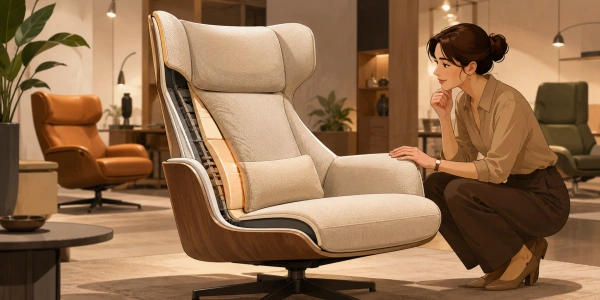
Foam density directly affects how a comfortable lounge chair feels over time. High-density foam (typically 2.5 to 3.0 pounds per cubic foot) provides better support and lasts longer. Low-density foam (under 1.8 pounds per cubic foot) may feel soft initially but can sag after a few months. For commercial use, choose high-resiliency (HR) foam that recovers quickly. For home use, medium-density foam often balances softness and durability well.
Testing Cushion Recovery
Press your hand into the cushion and release it. If the foam springs back within a few seconds, the chair will stay comfortable longer. Slow recovery indicates poor-quality foam. For a comfortable lounge chair, this simple test is more reliable than reading marketing claims alone.
Seat Height and Depth for Different Users
Seat height should match the user’s leg length. Standard lounge chair seat height ranges from 16 to 20 inches from the floor. Shorter users prefer 16 to 17 inches, while taller users need 18 to 20 inches. Seat depth also matters. A depth of 20 to 22 inches suits most adults, but deeper seats (24 inches) may require a footrest for shorter people.
Adjusting for Tall or Short People
For tall individuals, look for a seat depth of 22 inches or more and a back angle of 100 to 110 degrees. For shorter users, a seat depth under 20 inches and a lower seat height help maintain proper posture. These adjustments ensure the comfortable lounge chair fits the user’s body, not the other way around.
Commercial vs. Residential Durability
Commercial lounge chairs must withstand 24/7 use. They require reinforced frames, high-density foam, and stain-resistant upholstery. Residential chairs can use lighter materials. A study by the Upholstered Furniture Action Council shows that commercial-grade foam lasts 3 to 5 times longer than standard foam in high-traffic areas. If you are buying for a hotel lobby, invest in commercial-grade construction.
FAQ
Q: What is the most important thing to check before buying?
A: The most important thing is whether the chair fits the user and the space. Comfort, proportion, material, and construction should be checked together.
Q: Is a lounge chair suitable for commercial use?
A: Yes, but commercial use requires stronger durability, easy-clean upholstery, stable frames, and consistent production quality.
Q: Can lounge chairs be customized?
A: Many factories can customize fabric, color, chair legs, cushion firmness, labels, logo branding, and packaging. Larger structural changes may require higher MOQ and longer lead time.
Conclusion
A good lounge chair should look attractive, feel comfortable, fit the room, and remain durable after long-term use. For business buyers, choosing a reliable lounge chair manufacturer or supplier also improves quality control, customization, and wholesale value. Whether for home or commercial use, investing in a comfortable lounge chair means checking foam density, seat dimensions, and construction quality first. Your body—and your budget—will thank you.