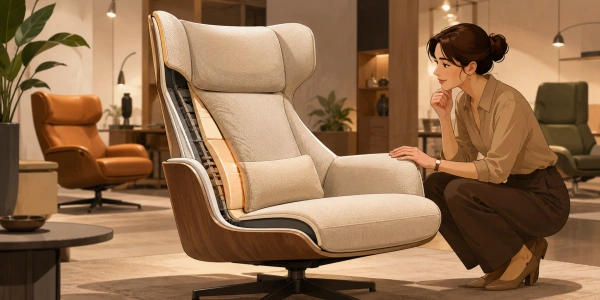
Ever wonder why some chair cushions feel like a cloud while others go flat in months? It all comes down to resilience. This guide explains how cushion bounce-back works, why it matters for your comfort, and how to choose the right support for your seat.
Understanding the Bounce and Support of Your Chair Cushion
Let’s talk about that wonderful feeling when you sit down and your chair cushion gently hugs you, then springs back to its original shape when you stand up. That’s resilience in action! In simple terms, seat cushion resilience is the material’s ability to recover its form after compression. Think of it like a trusted friend who’s always there for you—no matter how long your workday is, a resilient cushion won’t leave you feeling unsupported. It’s the secret behind lasting comfort and is often described as the cushion’s recovery rate or compression set resistance.
What Exactly is Cushion Resilience?
You might be asking, “What does chair cushion resilience mean for me?” Technically, it’s a measure of how well the foam or filling bounces back. A high-resilience material returns to nearly 100% of its original thickness quickly, while a low-resilience one stays compressed. This isn’t just about bounce; it’s about consistent seat support over years. A common test for this is called ILD (Indentation Load Deflection), which basically tells us how firm the foam is. But resilience is what ensures that firmness lasts.
Why Cushion Resilience Matters for Your Comfort
Here’s the real-world impact: a cushion with poor rebound properties will start to sag, creating a “hammock” effect that throws your posture out of alignment. You may find yourself slouching or fidgeting by mid-afternoon. On the flip side, excellent cushion durability means even pressure distribution, which reduces pressure points on your thighs and tailbone. This is crucial for ergonomic seating and can make a huge difference if you spend hours at a desk. It’s the key to unlocking all-day comfort and preventing that dreaded seat fatigue.
Common Cushion Materials Compared
Not all cushioning is created equal! The foam density and type are huge factors in resilience. Let’s break down the most common options you’ll encounter when looking for a chair seat upgrade or replacement.
High-Resilience (HR) Foam
This is the gold standard for long-lasting seat comfort. HR foam has an open-cell structure that allows air to flow freely, giving it a fantastic bounce-back. It’s often used in quality office chairs and automotive seating. While it might cost a bit more upfront, its longevity makes it a wise investment. You can learn more about foam properties from resources like the Polyurethane Foam Association.
Memory Foam (Viscoelastic)
Ah, memory foam. It’s famous for contouring to your body, which is great for pressure relief. However, its resilience factor is lower—it returns to shape slowly. This means it can sometimes feel “stuck” or retain heat. For a chair cushion, a blend with HR foam or a gel-infused version can offer a better balance of comfort and bounce.
Standard Polyurethane Foam
This is the most common and economical filling. Its cushion performance varies widely based on density. Low-density foam compresses quickly and loses its shape, leading to that permanent butt-shaped dent. Higher-density polyfoam offers better seat padding recovery and is a decent budget-friendly option for lighter use.
Choosing the Right Cushion for You
So, how do you pick? Ask yourself about your use. For an office chair cushion used 8+ hours daily, prioritize high resilience and higher density (look for ratings like 2.0 lbs/ft³ or higher). For a dining chair used occasionally, standard foam may suffice. Don’t forget thickness! A thin, high-resilience cushion often provides better posture support than a thick, low-quality one. We suggest you check the product specs for density and ILD ratings—they’re more telling than vague terms like “premium foam.
Care and Maintenance Tips
To keep your cushion bouncing back for years, a little care goes a long way. Fluff and rotate it regularly to prevent uneven wear. Avoid placing it in direct sunlight or near heat sources, as this can break down the foam cells. If it’s removable, check the tag for cleaning instructions—usually spot cleaning is best. Remember, protecting your cushion from spills and excessive weight will directly extend its service life and maintain that supportive feel you love.